Lego Mosaics
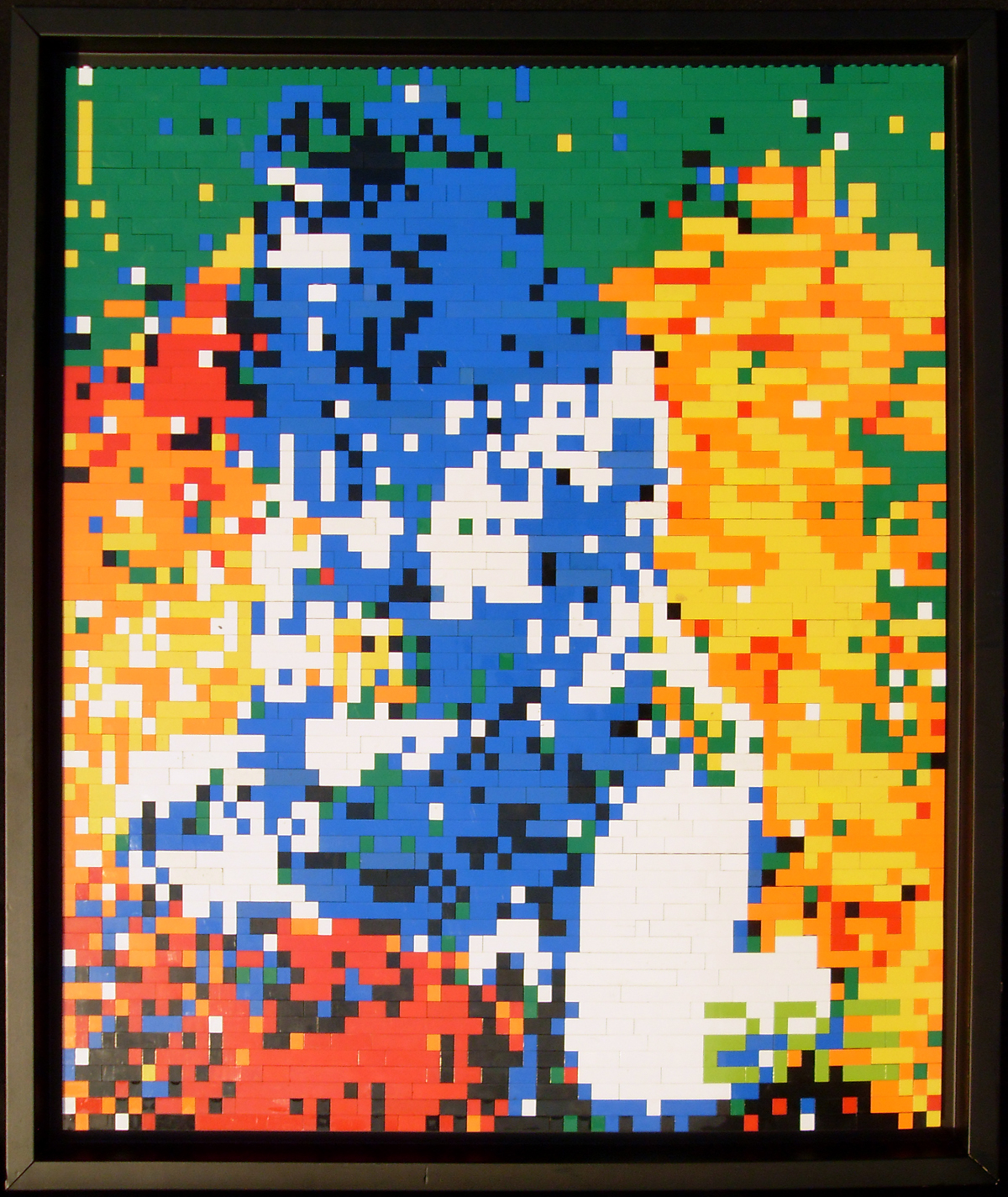
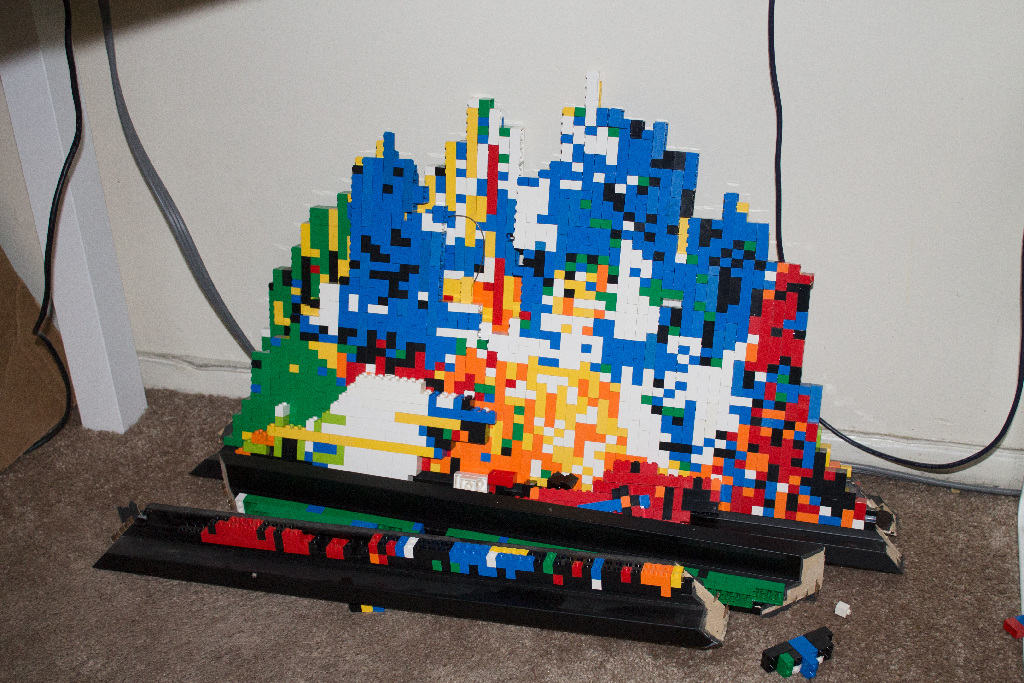
I make artwork that sits at the intersection of childhood obsession, Scandinavian design ethics, and the kind of meticulous patience usually reserved for people who build ship models inside bottles. My primary material is the LEGO brick. I use the original brand, chosen for the simple importance of using an original source material and a connection to my Danish heritage. Over the years, I've developed a visual language that flattens perspective, embraces pixel-like geometry, and occasionally falls off gallery walls. This body of work consists of four pieces: two sold, one destroyed by gravity, and one partially dismantled during a personal disagreement of a romantic nature. The last one became an installation.
Method
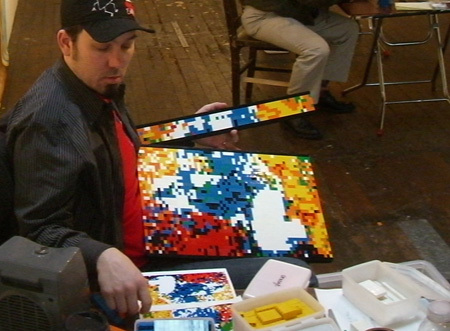
Instead of using the more common "studs-up" technique, I chose a side-view construction. The rationale was straightforward: it created a stronger, flatter image with a cleaner graphic quality.
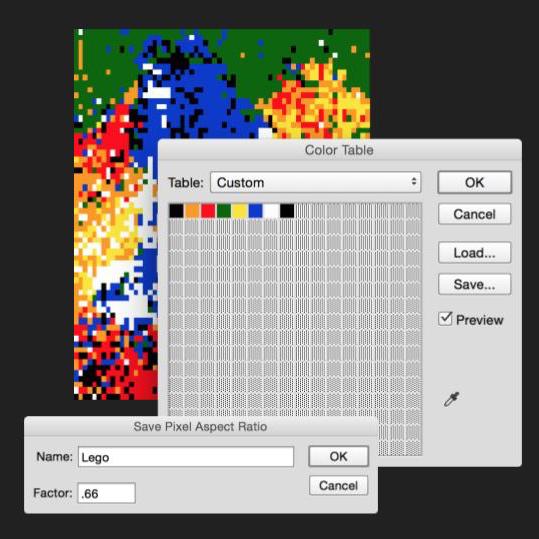
Two interesting consequences emerged from this decision. First, the individual "pixels" became taller than they were wide, which subtly altered the perceived resolution of each piece. Second, the structural instability of a sideways brick required two interlocking layers to hold everything together. Rather than hide this structural choice, I left the back of the painting visible. This was a deliberate decision that required custom framing.
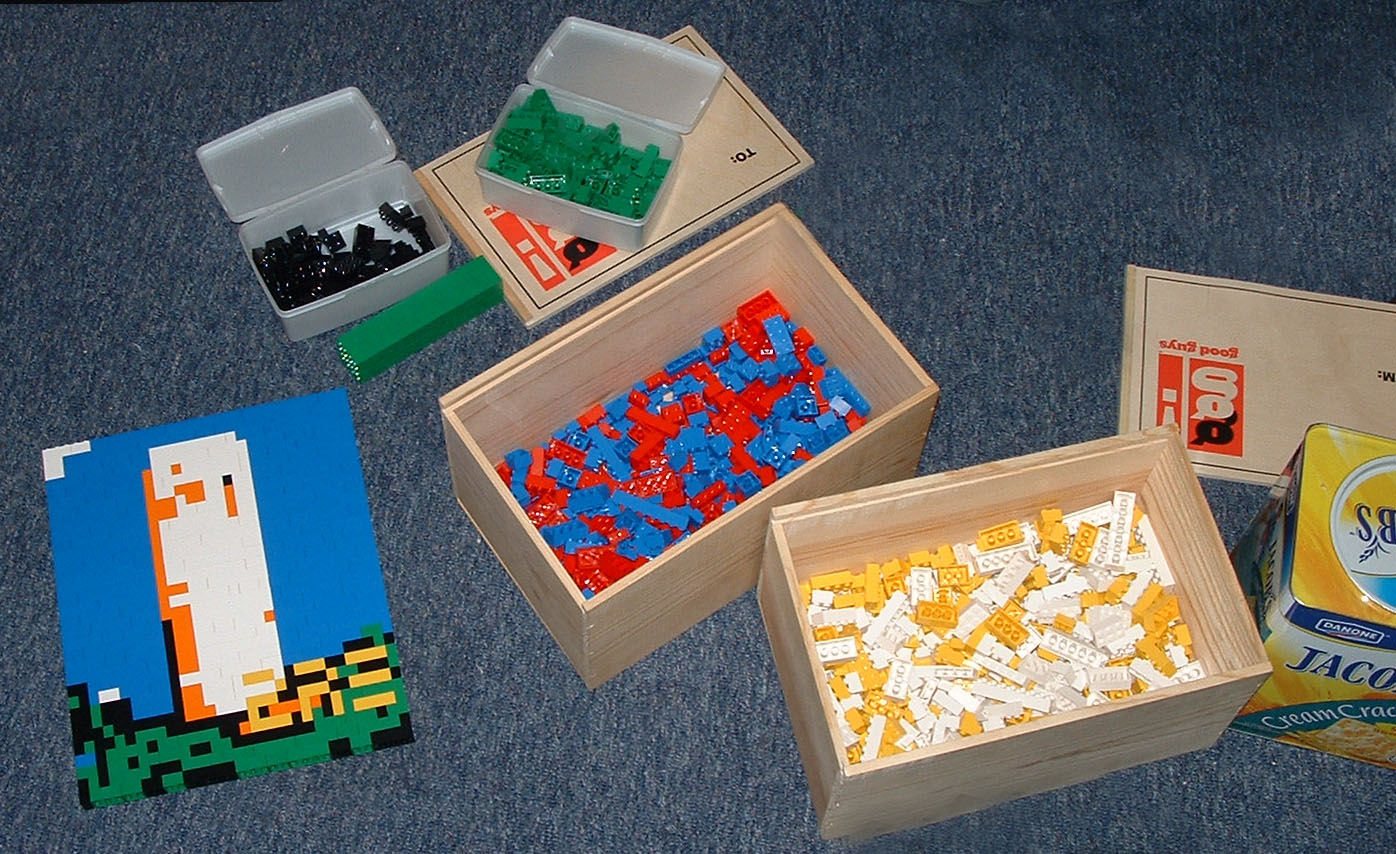
It was important to use authentic LEGO brand bricks, so I sourced them from new sets and found used lots online. This meant spending a reasonable amount of time sorting through bags of plastic. I signed each work as "2RE" using LEGO bricks at the bottom right of the canvas.
I created four works in total. Two sold. Two were destroyed. The largest one fell off a gallery wall before I could take a picture of it. The other was partially destroyed during an argument with an ex-lover. That piece was exhibited as an installation in its broken state. I did not plan this as a commentary on impermanence, but I have since decided that it absolutely is one.
Concept
I was obsessed with LEGO as a child. I also have Danish heritage, which made the brand feel like more than a toy. It was a small, plastic tether to a country I otherwise knew mostly through stories from my family. I wanted to explore that connection seriously, so I began researching LEGO culture and the surprisingly intense fandom surrounding it. There are grown adults who organize their collections by Pantone code. There are conventions. There are arguments about clutch power.
My work sits within that strange space between reverence and absurdity. The bricks are authentic. The construction is painstaking. The final images are flat, quiet, and oddly dignified.
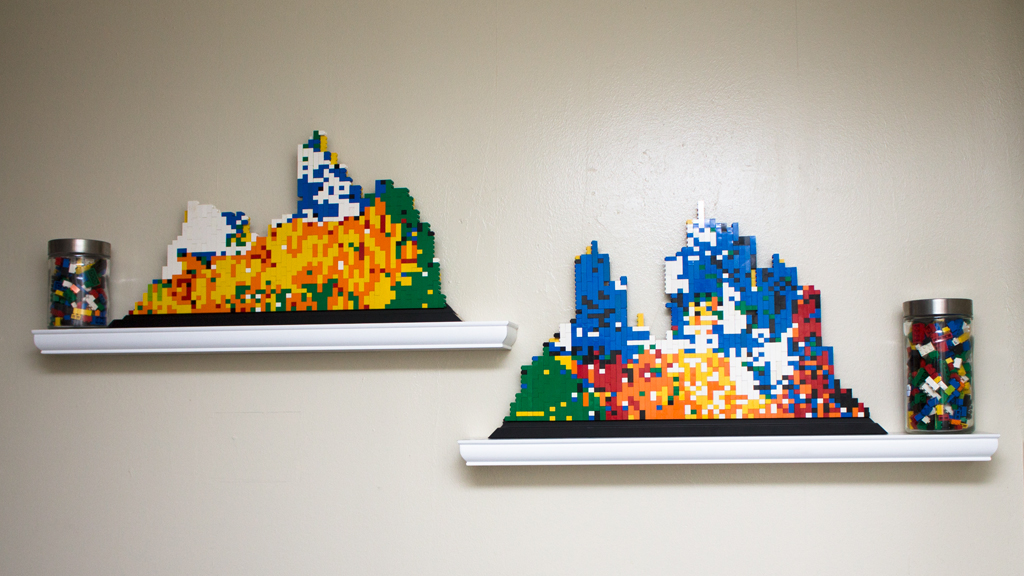
When one of the works was broken during an argument, only the frame broke. The bricks remained intact, but the piece separated into sections. I kept the two larger sections, which resembled mountains, and discarded the two shortest sides of the frame. The remaining bricks were broken down and placed into two jars. The work became a landscape and accidentally or inevitably, a topology of the rupture between my lover and me. We built our relationship brick by brick. She destroyed the work, and I did the rest.