Insanity
1998
In 1998, I put a journal and audio tapes I created during a psychological breakdown. I framed them, put up museum labels, and installed them in a gallery show. In hindsight, I can see that I was an early adopter and was oversharing before oversharing online became cool.
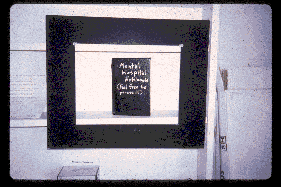
In 1996, I was hospitalized and diagnosed with a lively case of bipolar disorder. It was terrible, expensive, and I do not recommend it to anybody. After that, I went through a phase of telling everyone I knew all about it. If a friend asked a simple "how's it going?" I would launch into a long narrative about my stay, what medications I was on, what they did, and my sweeping views on sanity, mental health, and the healthcare system. I felt it was my duty to talk about it openly, hoping others wouldn't be afraid to talk about their issues openly.
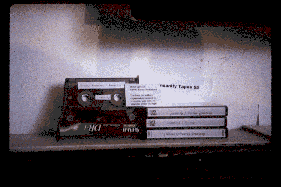
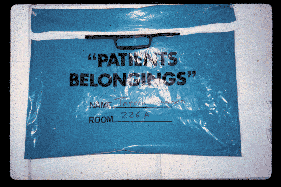
I wrote about it in my e-zine and mounted an installation at the art gallery I was running at the time. On display were my hospital journal, hospital clothes, and various paraphernalia I'd managed to sneak out of the hospital with. More embarrassing than a personal journal sitting there for all to look at was the fact that no one opened it. After the show, I realized that the story of a white, middle-class male's trip to the loony bin was not only uninteresting in itself but made for uninteresting art. Still, framing that chaos and putting it on a wall gave me something I hadn't expected: a kind of closure. It let me step back and see the experience as a chapter, not the whole book.
These days, I've stopped telling my stories and opinions about mental health as a conversation starter. My main takeaway is this: taking care of your mental health is essential. Finding treatment, sticking with it, doing the real work is what is important. But that vital, life-saving process doesn't have to be something you wear on your sleeve. Some of the most important healing happens in private.